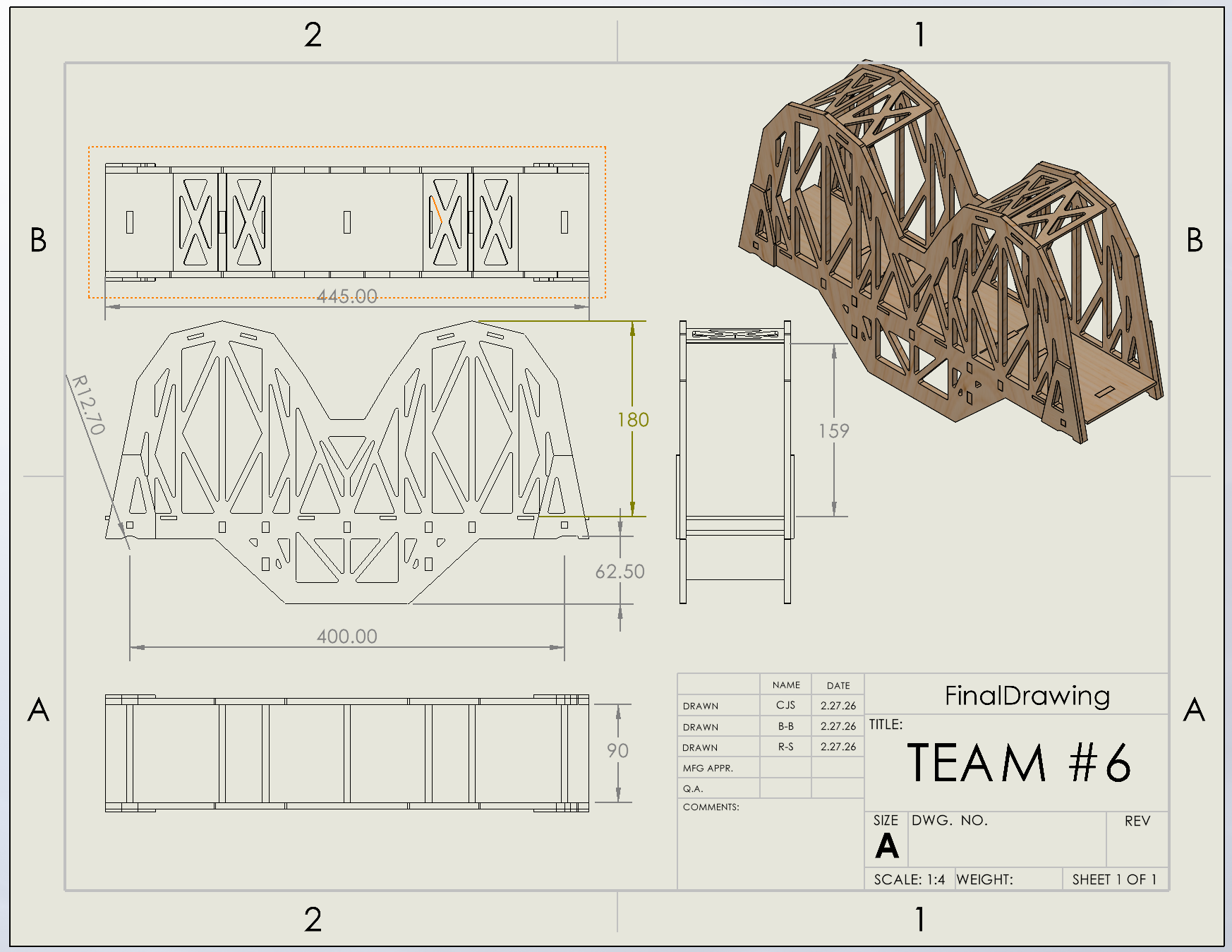

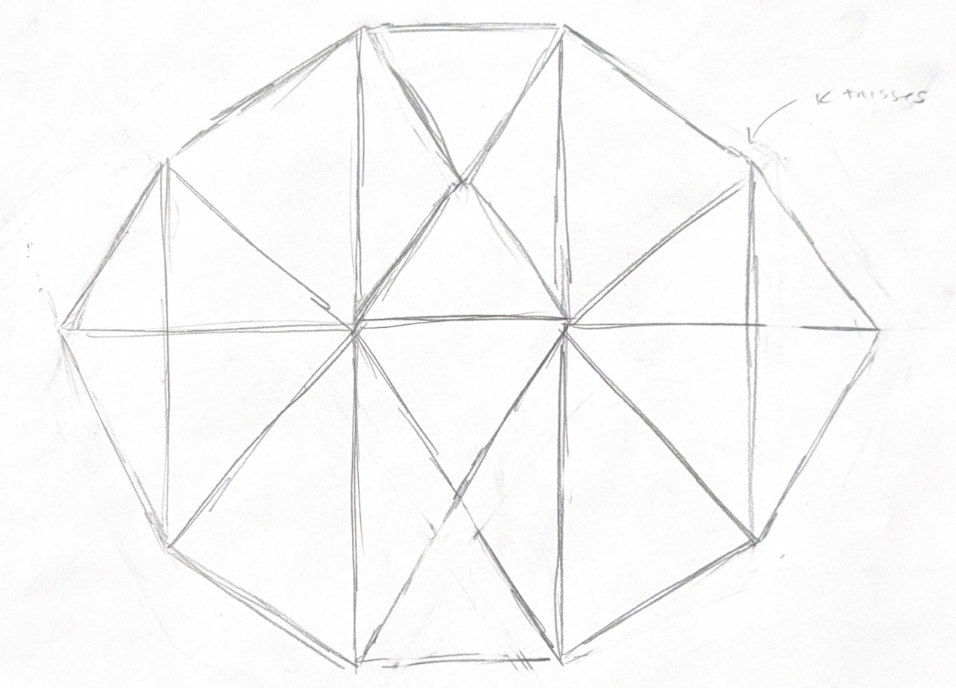
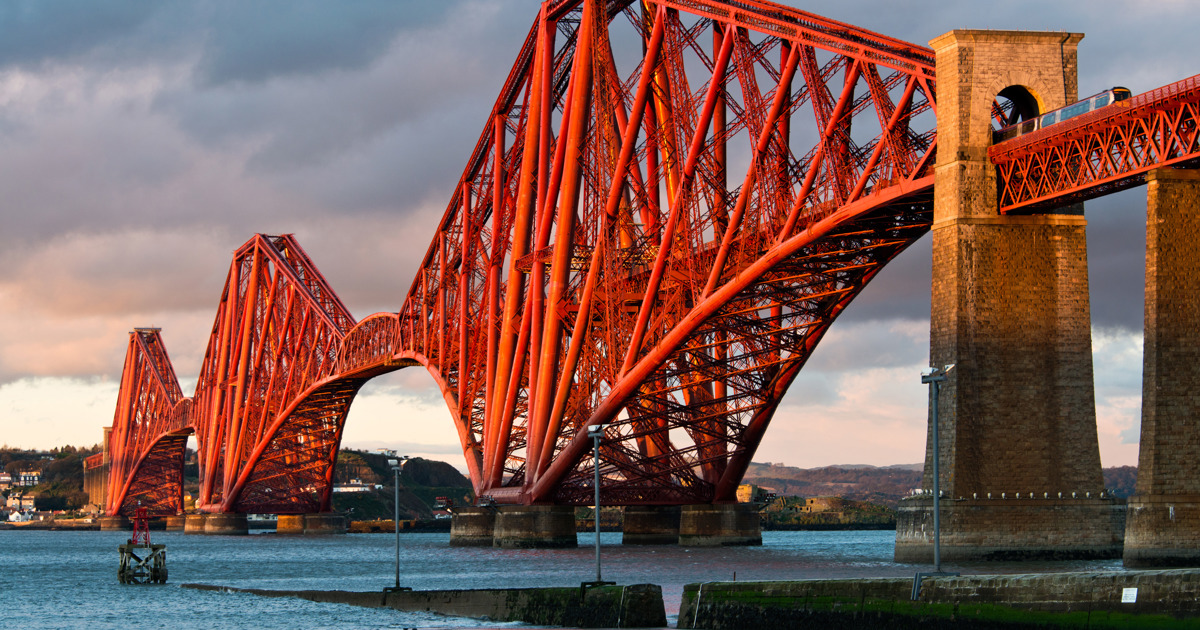
The design process began with research into existing truss bridge types, followed by multiple preliminary sketches exploring geometry, member layout, and overall form.
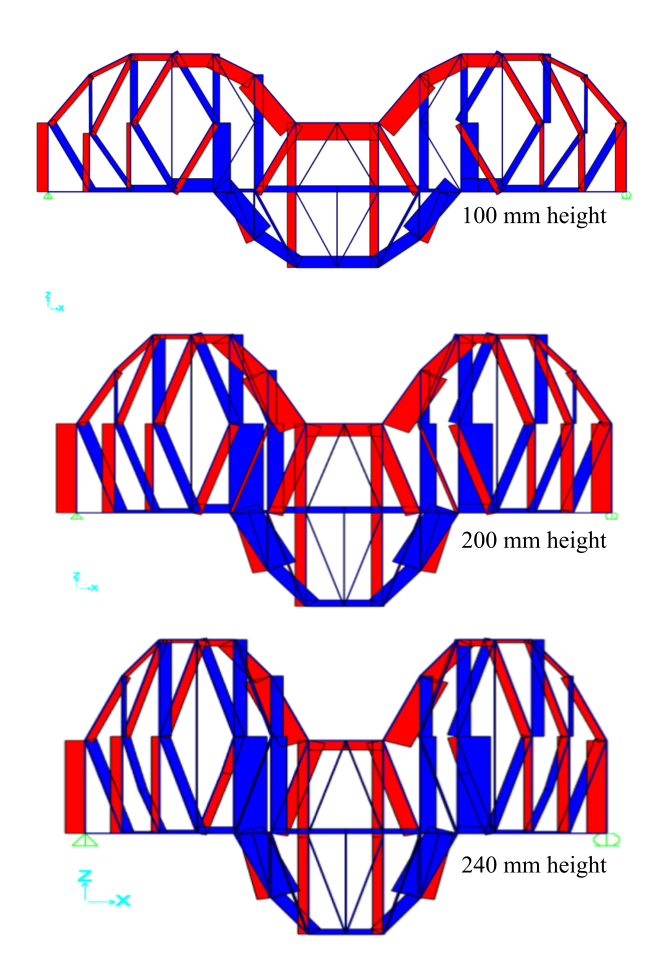
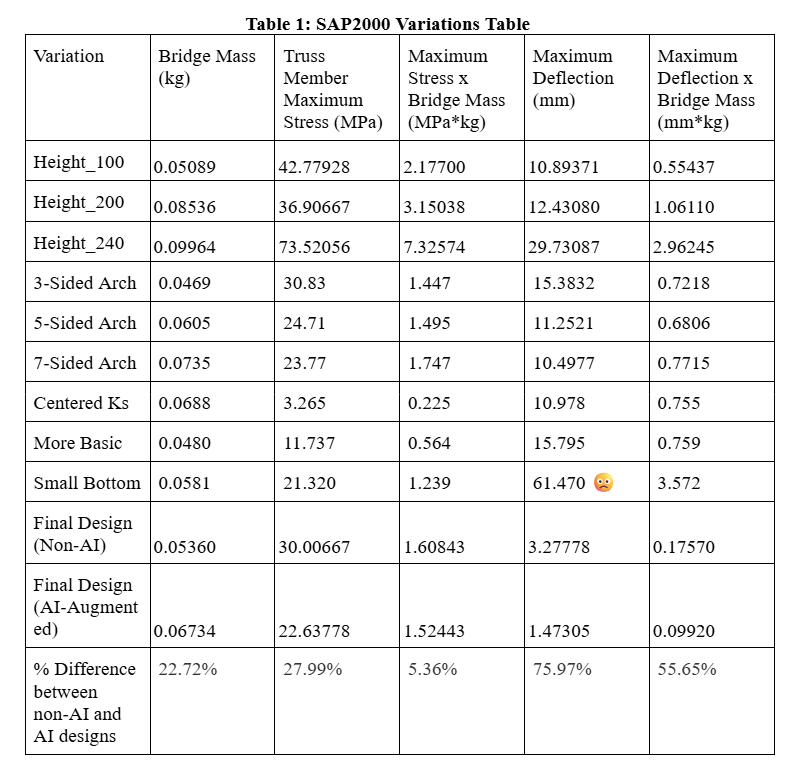
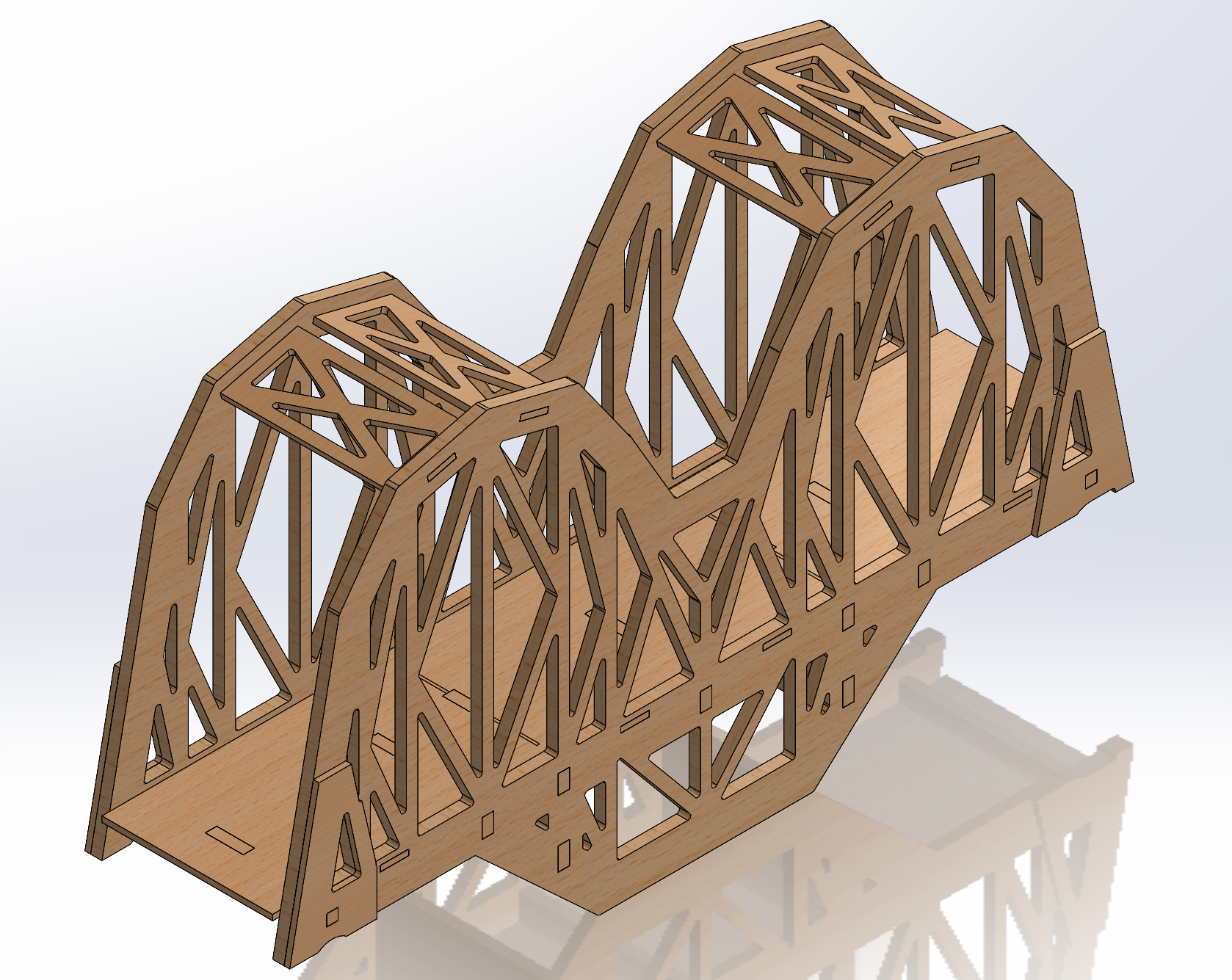
After selecting a concept, the bridge was iteratively refined through analytical and simulation-based modeling. SAP2000 was used to compare variations in geometry and member layout, while SolidWorks Simulation was used to evaluate stress, displacement, and likely failure regions.
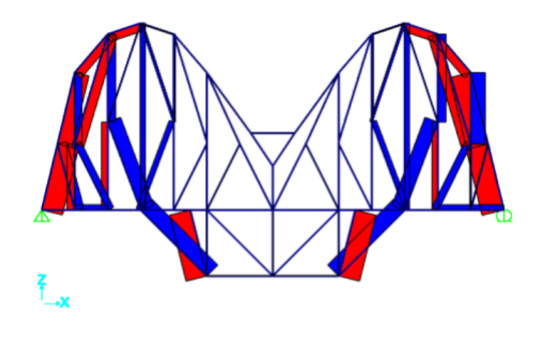
Final SAP model.
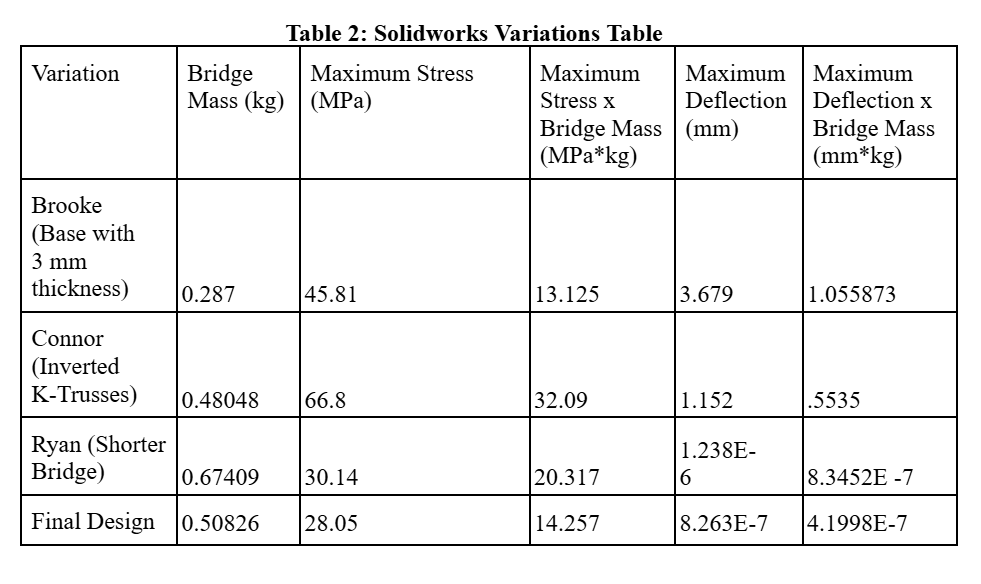
Height, member orientation, bracing strategy, and member thickness.
Lower stress concentration, lower deflection, and better performance per unit mass.
From the SAP 2000 2D analysis (Phase 2), to optimize these variables, a height of 130 mm, 5 different arches, and a k-truss configuration was chosen.
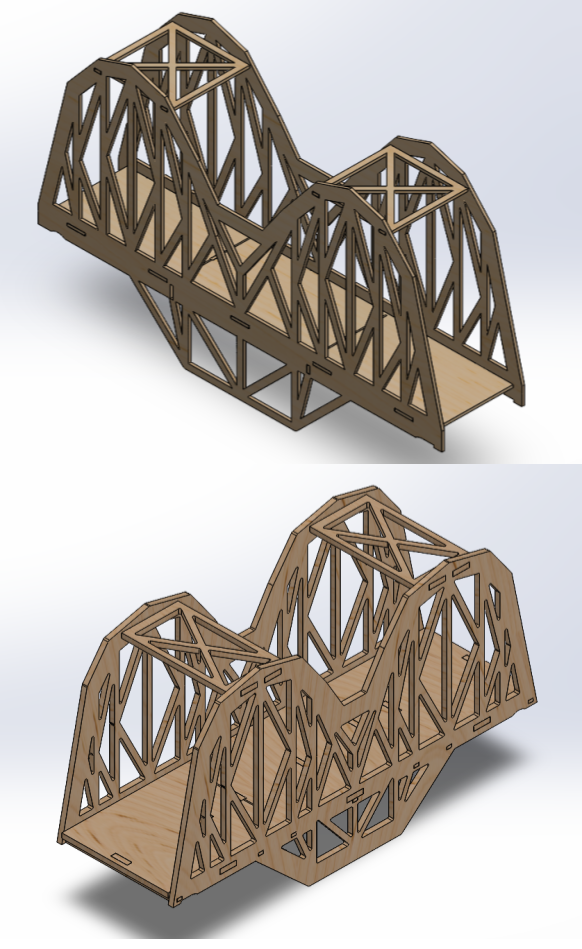
From the SolidWorks FEA analysis (Phase 3), a thinner deck, 0.5 kg mass, 6 mm crossmember x 7, and a K-truss configuration were maintained in the final bridge design.
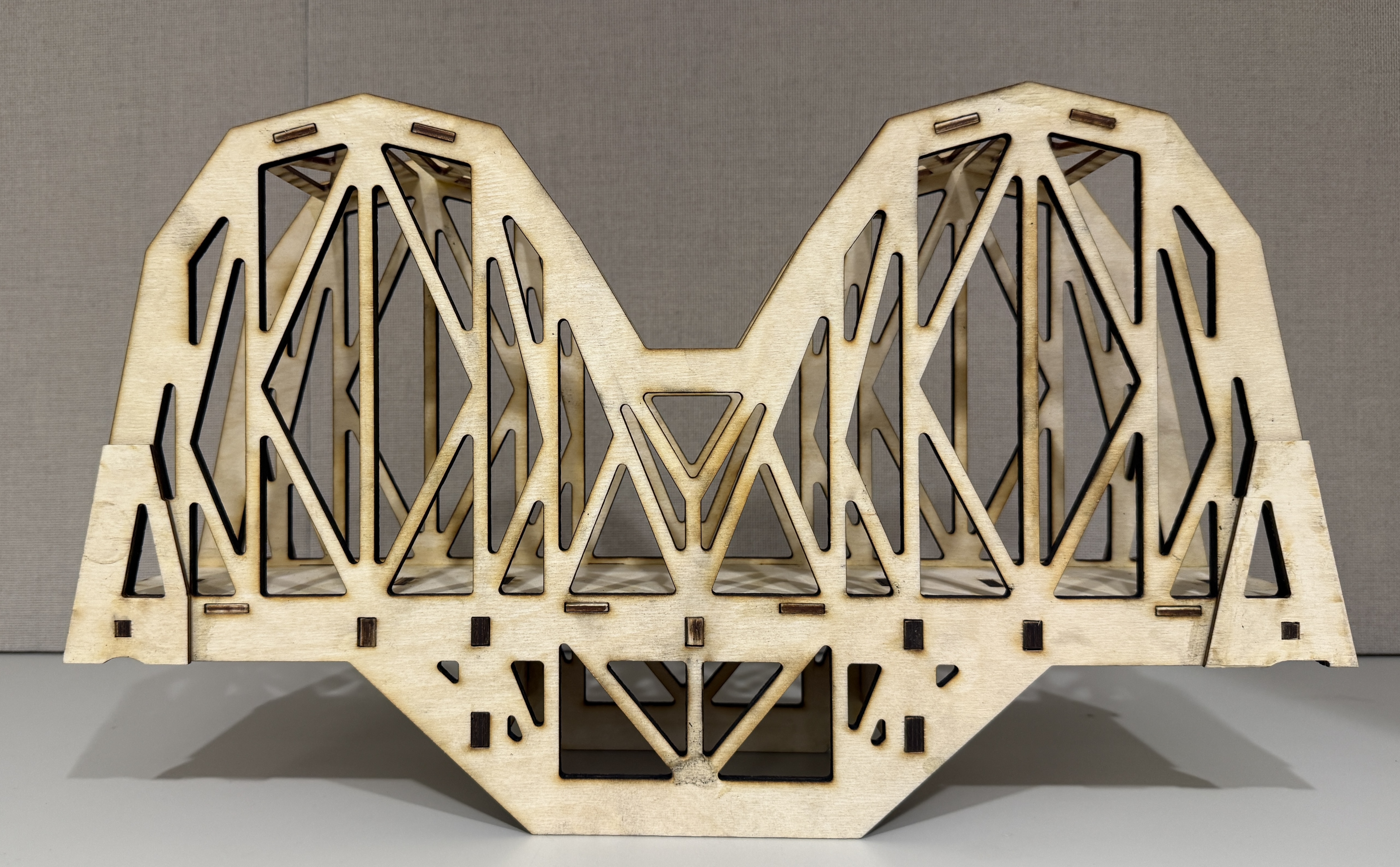
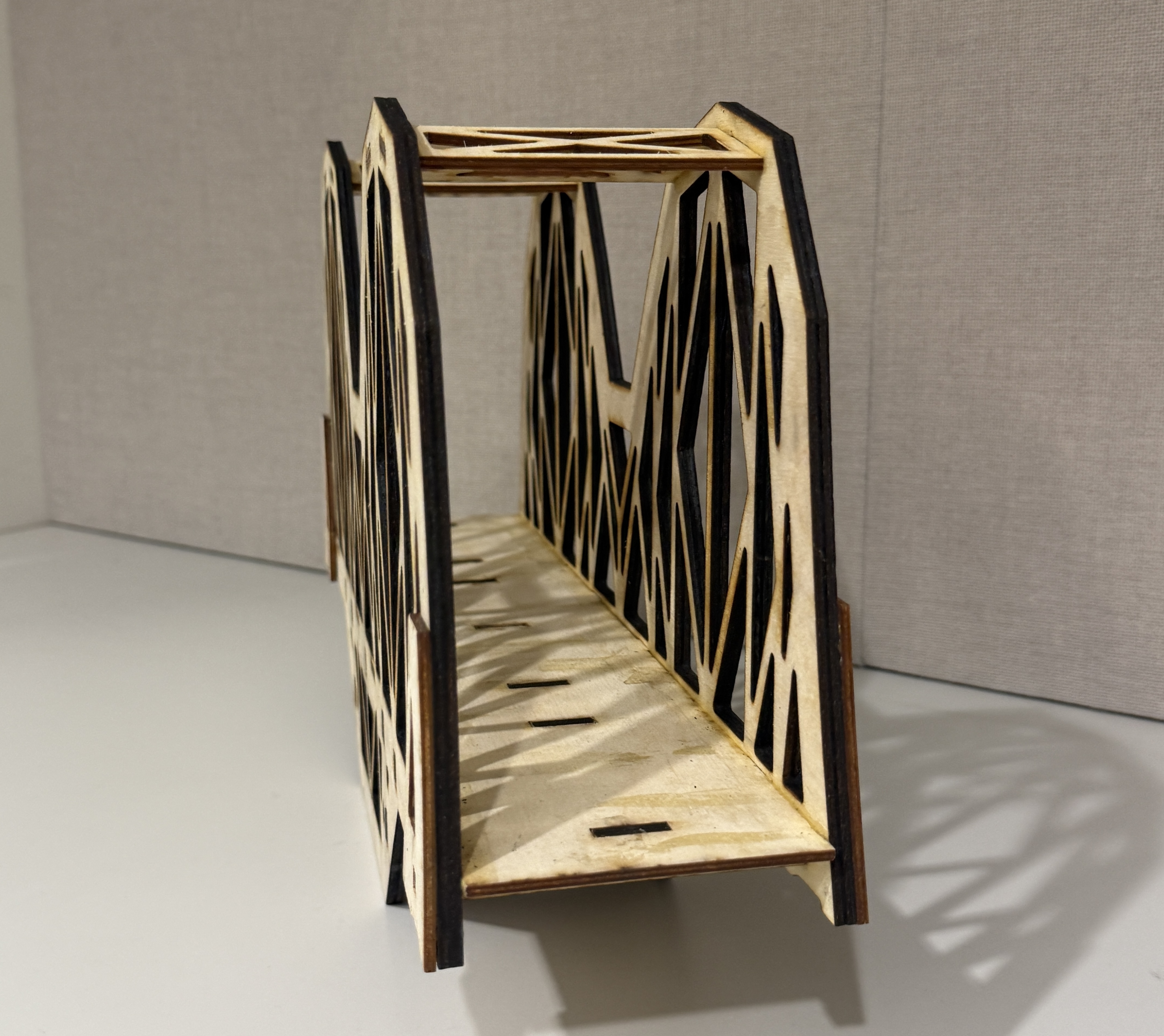
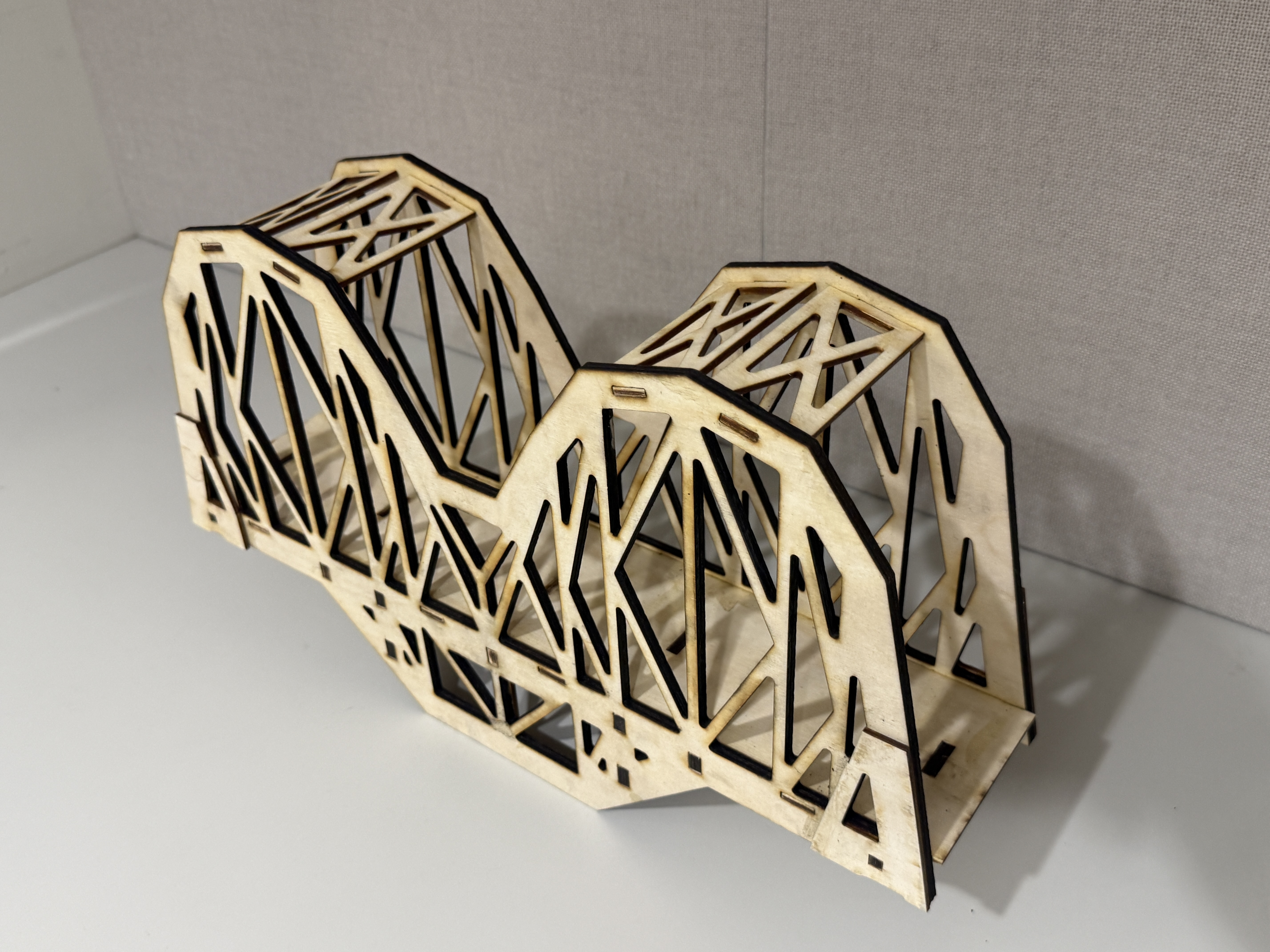
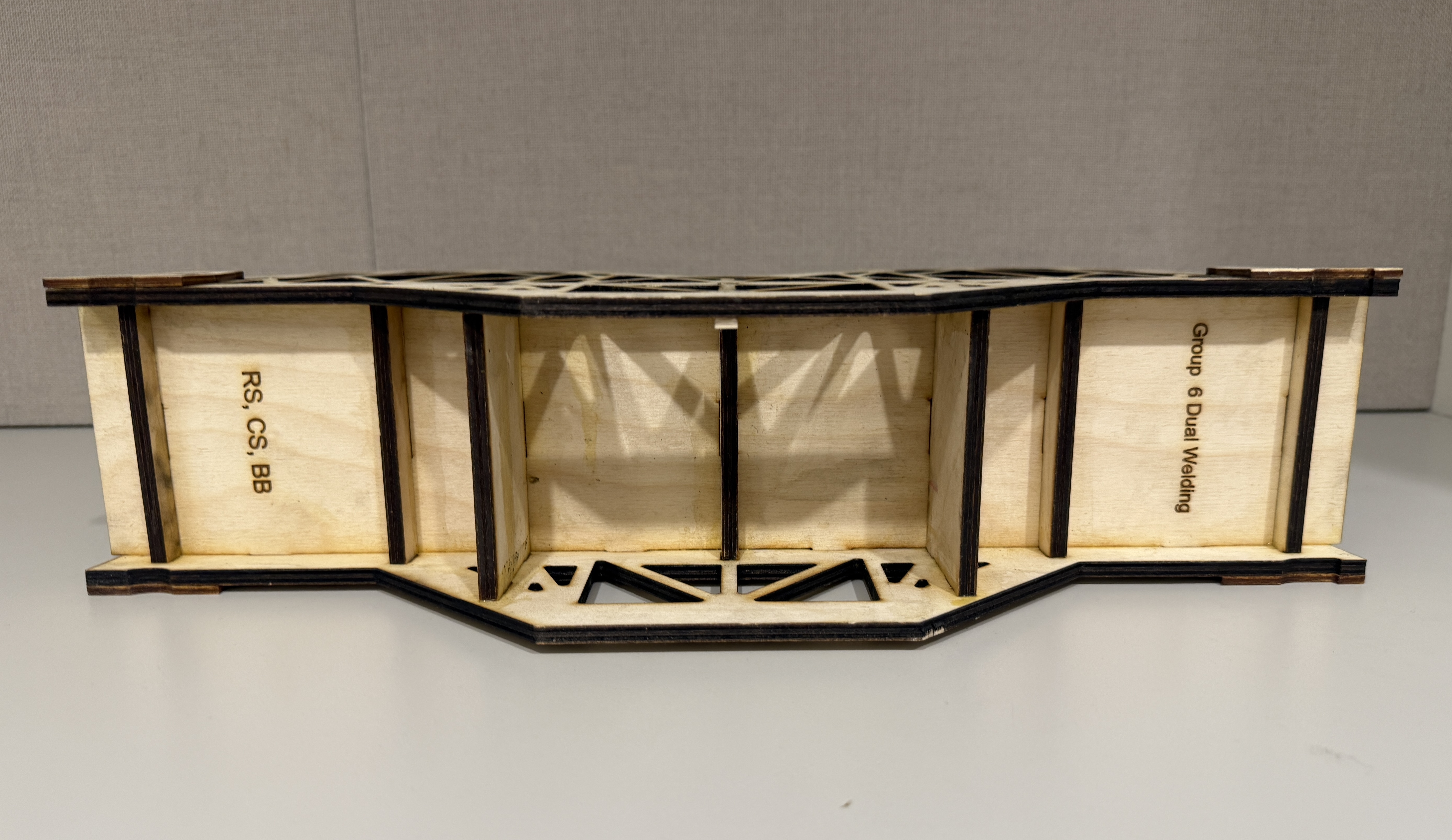
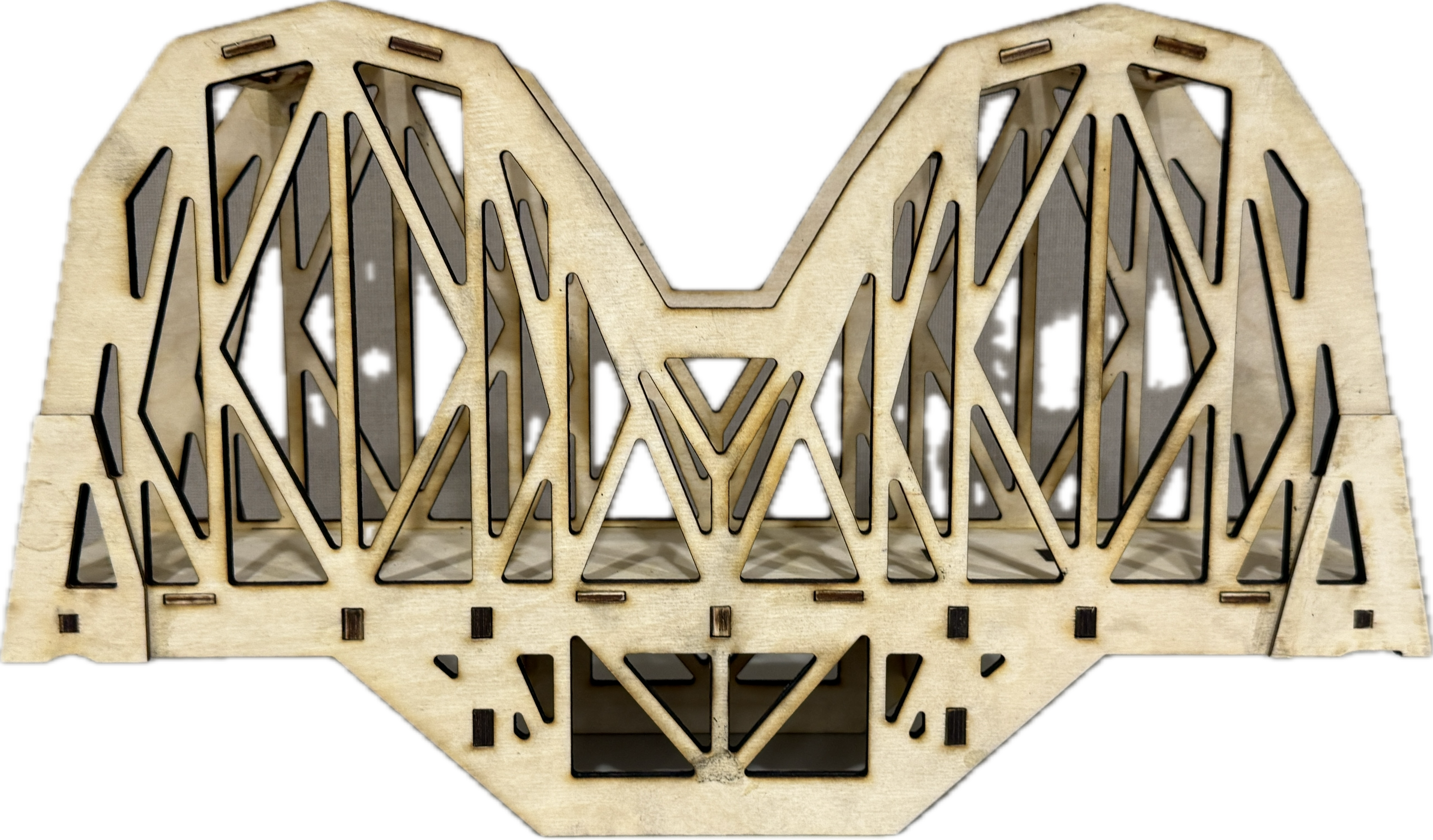
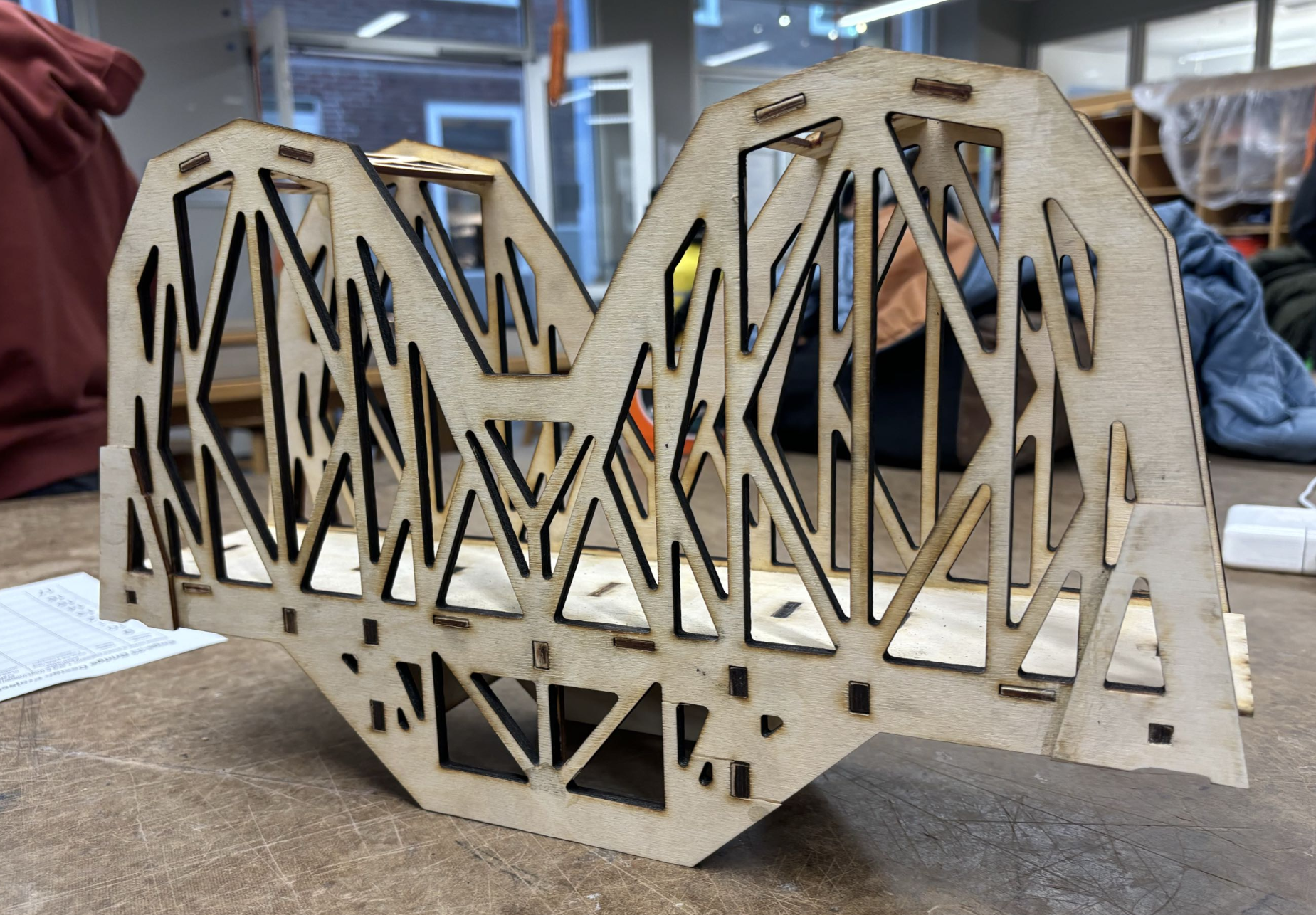
Final bridge: all pieces laser-cut, glued, and ready for testing.
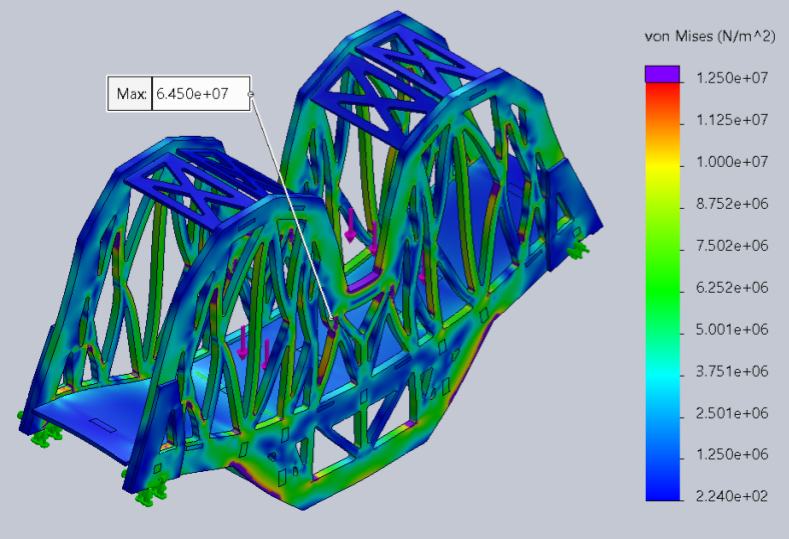
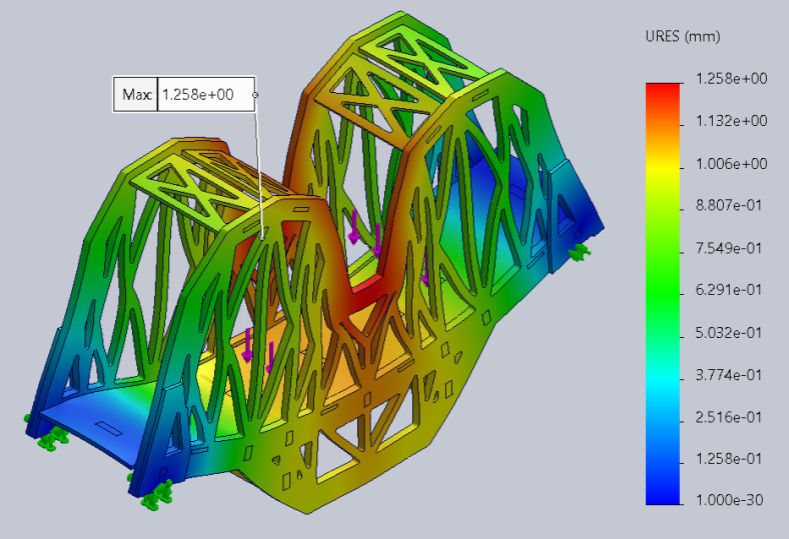
Prediction targets:
The bridge was tested under a centered loading configuration using the Instron. An increasing load is applied over time, with force and deflection measured continuously. Loading stops when the first failure point occurs (usually marked by a cracking sound).
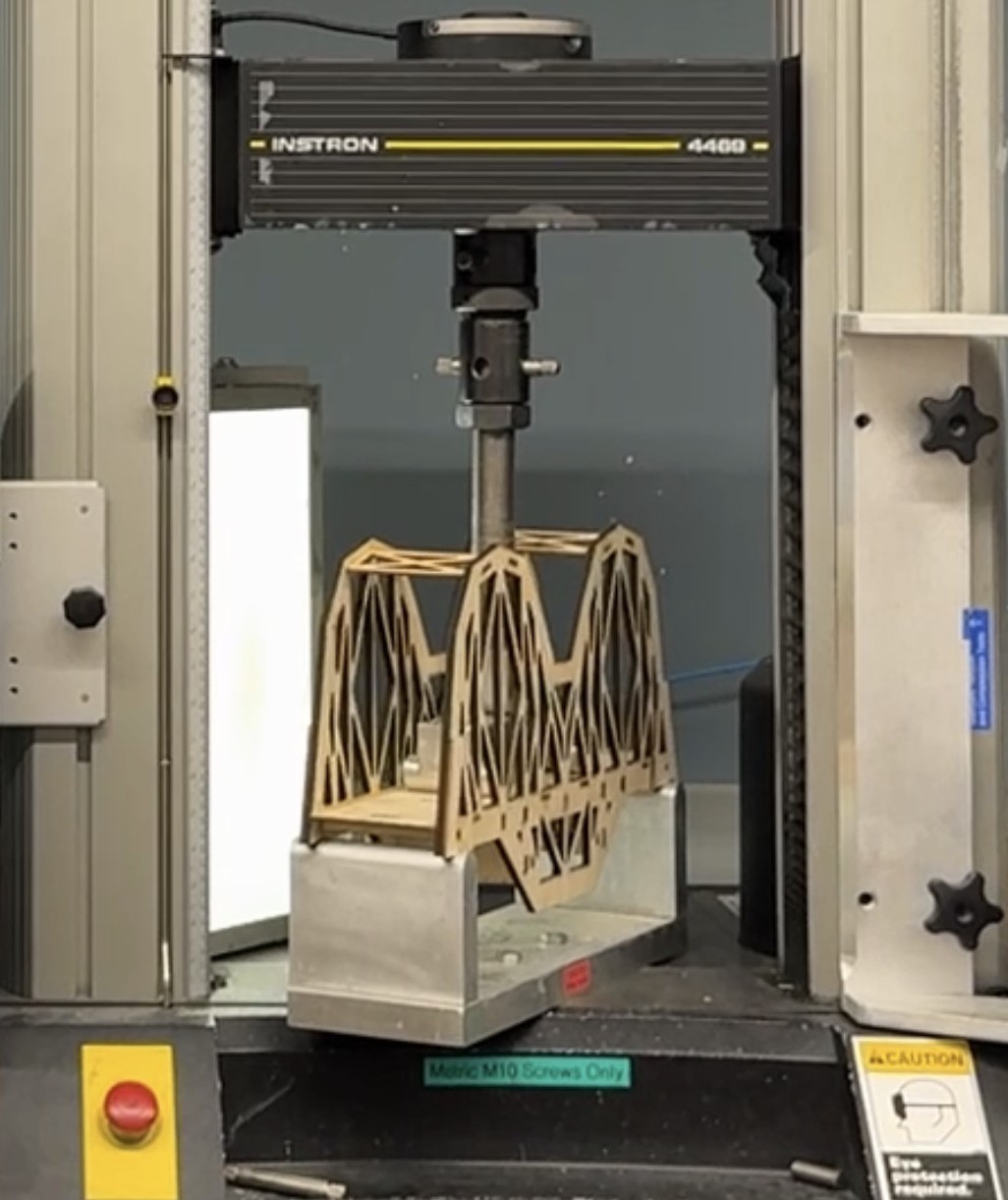
The final bridge successfully translated analytical design choices into measurable structural performance, while also revealing where real-world fabrication and connection effects differed from idealized models.
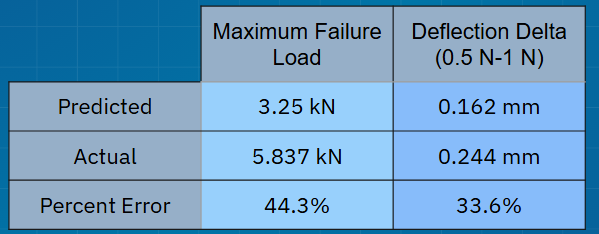
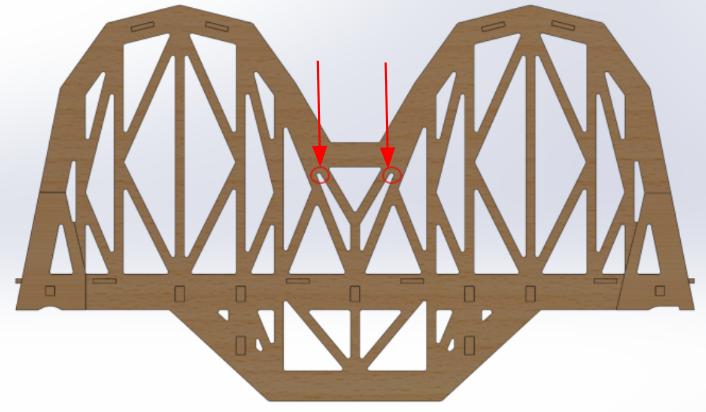
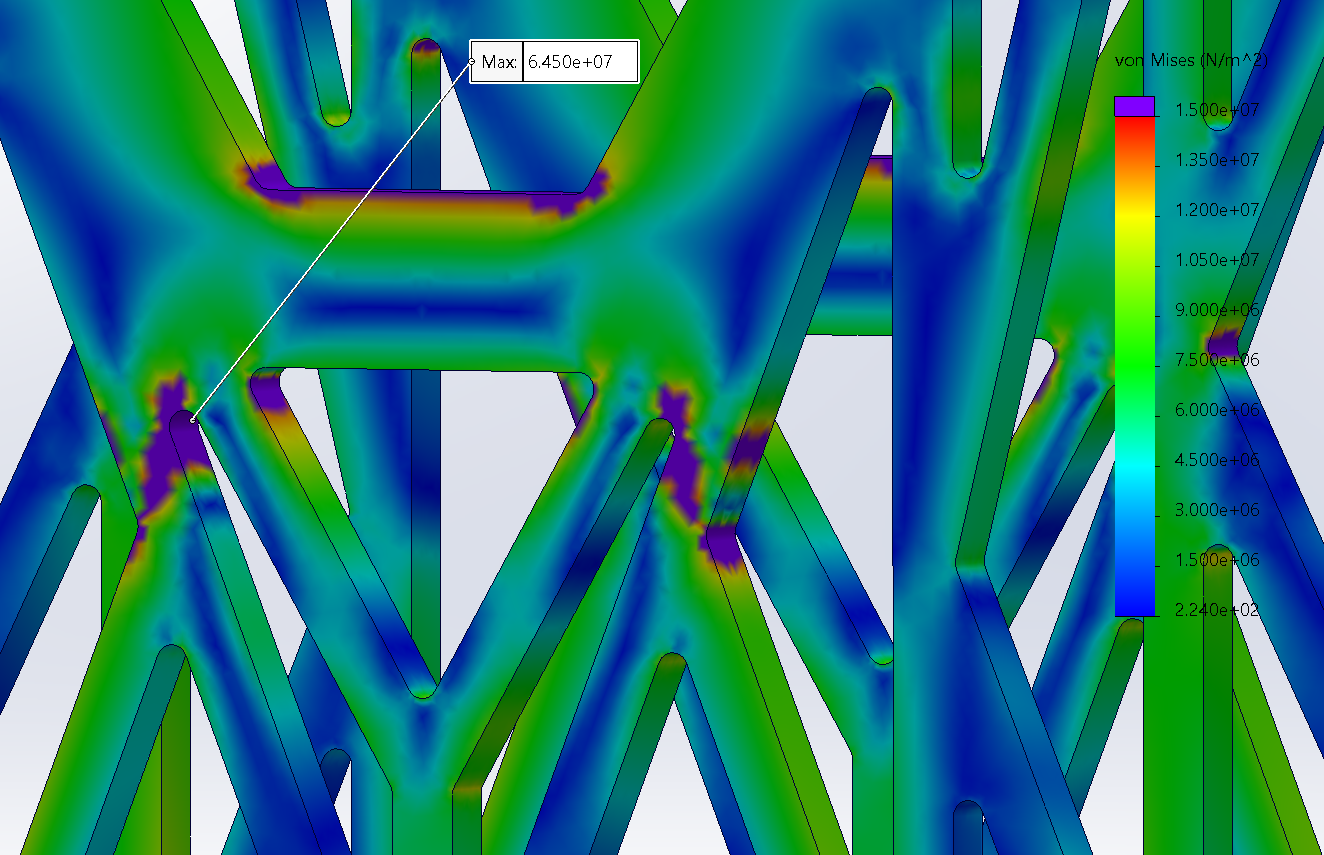
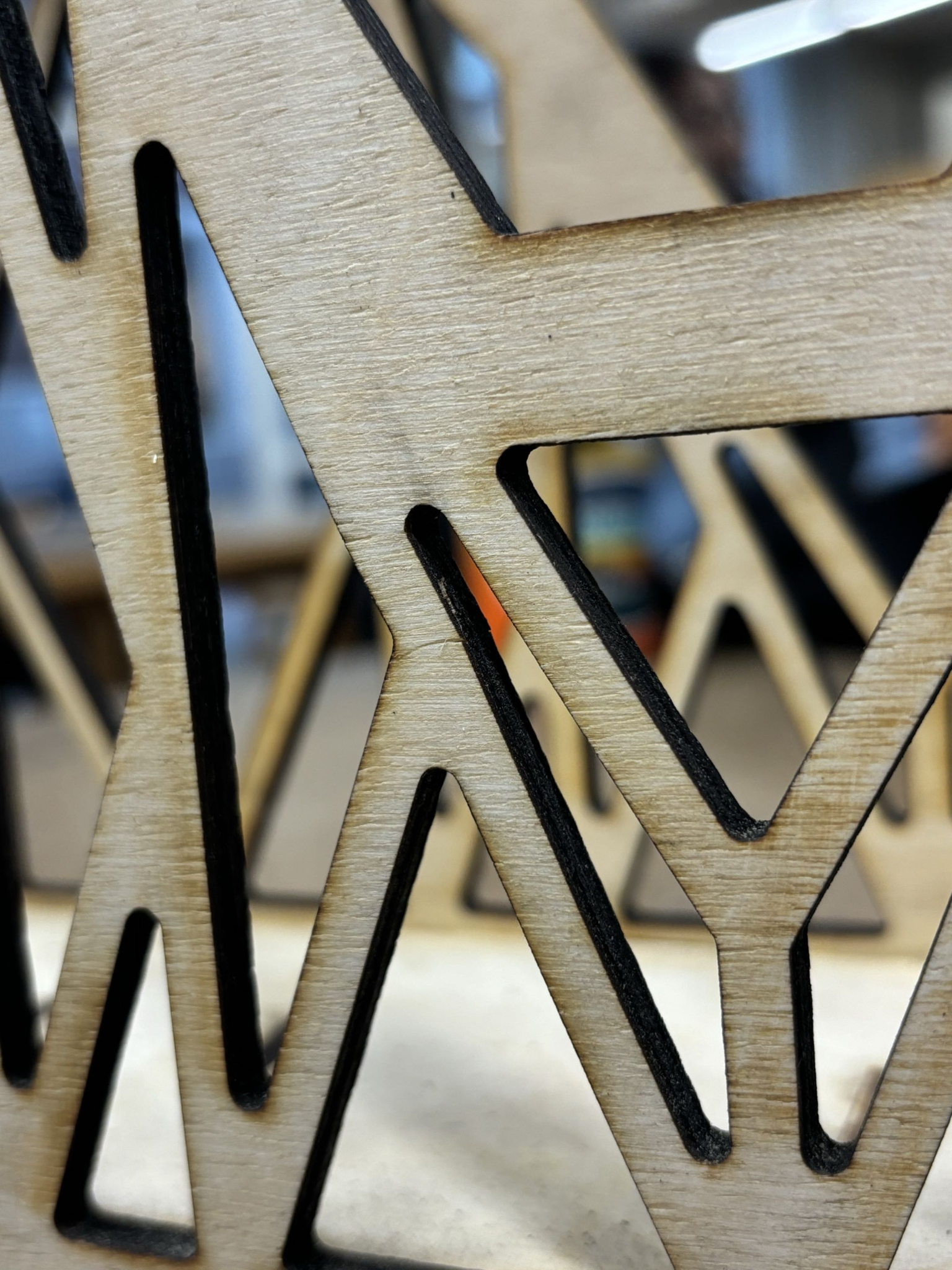
We predicted the correct member that would fail first! However, our max. load and deflection were both more conservative than the actual observed behavior.